By David R. · Updated 2026-06-28 · 9 min read
 You’ve heard about cutting cable, but the sheer number of options makes it hard to know where to start. An iptv service might be the solution you’re looking for — but only if you understand what it actually delivers, where it falls short, and how to pick one that works reliably. This guide walks through everything a regular viewer needs to know, with no fluff or fake promises. The television landscape has shifted. Traditional cable subscriptions are declining, and internet-based viewing is the norm. But not all streaming is the same. IPTV offers a middle ground between live broadcast and on-demand libraries, which is why it appeals to sports fans, international news watchers, and cord-cutters alike. The key is separating capable services from the unreliable ones that buffer constantly or disappear after a month.
 What Is an IPTV Service Exactly?
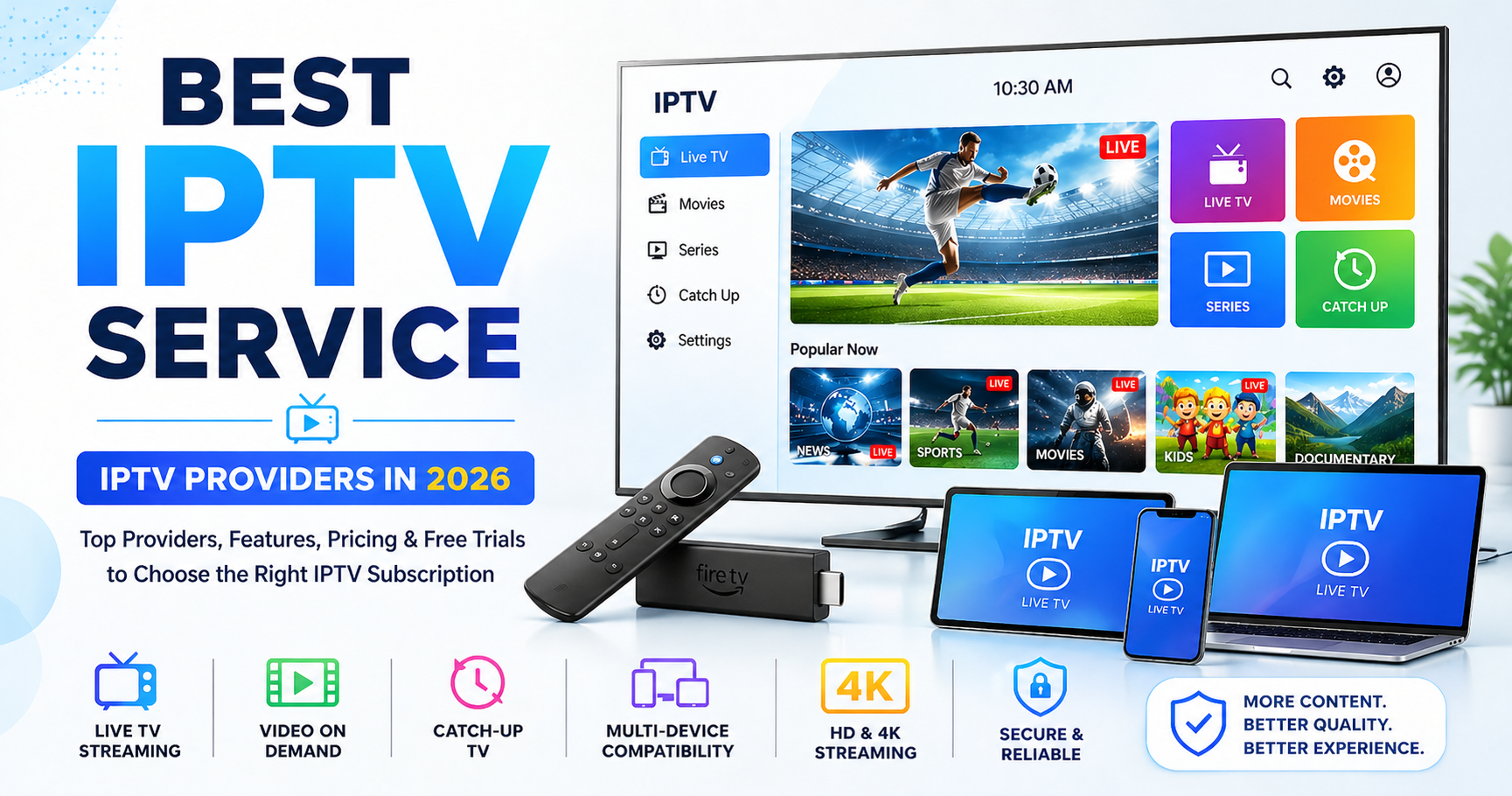
IPTV stands for Internet Protocol Television. Instead of receiving television signals through a cable box, satellite dish, or antenna, the content travels over your broadband internet connection. The image above shows a typical channel selection interface — that’s the core experience: live channels organized in an electronic program guide, alongside video-on-demand libraries. Three main categories exist within IPTV: live television (the direct replacement for cable), time-shifted media (catch-up TV that lets you watch a show that aired hours ago), and video on demand (a catalog of movies and series). A reputable iptv service will offer at least two of these, and the best ones include all three. Related entities worth understanding: a middleware platform (the software running the channel guide), a streaming protocol (usually HLS or RTMP that determines buffering speed), and a CDN (content delivery network that ensures servers near you handle the traffic). When a service advertises “no buffering,” what they really mean is they’ve invested in a strong CDN.How IPTV Works Step by Step
Related Reading: Neuro Energizer: Complete Guide - Everything You Need to Know
The process is simpler than most people assume. Here’s what happens between the moment you press “play” and the show appearing on your screen:1. Content acquisition and encoding
The provider captures live broadcast feeds or sources digital files. That raw video gets compressed into a digital format using codecs like H.264 or H.265.2. Server storage and streaming protocol
The compressed content is stored on the provider’s servers. When you request a channel, the server sends the stream using a protocol optimized for real-time delivery.3. Your device decodes the signal
Your smart TV, Firestick, or phone receives that data and decodes it into video frames. The app or player you’re using handles this interpretation.4. Electronic program guide populates
The middleware on the provider’s side sends channel names, show times, and artwork to your device automatically. This is what gives IPTV that “cable-like” feel. That’s the technical cycle. From a user perspective, it feels as immediate as flipping channels on a traditional cable box. The difference is that your internet connection quality directly affects picture stability.Concrete Benefits for Real Viewers
Why switch from traditional cable or free streaming apps? Here are the specific advantages that matter in daily use.Cost savings compared to cable packages
Typical cable bundles in the US range from $80 to $150 per month. An iptv service monthly subscription vs yearly plan can bring your cost down to $10–$25 per month. Yearly plans often knock another 25% off that already low price.International channel access
If you want channels from India, the Middle East, Latin America, or Europe, standard US cable rarely covers them. An iptv service for international channels typically aggregates packages from dozens of countries in one interface.Catch-up TV and pause functionality
Affordable iptv service with catch up tv means you can watch a show that aired three days ago without setting a DVR. Most providers keep 3 to 7 days of program history available.Multi-device usage
The same subscription usually works on your living room TV, bedroom tablet, and phone while commuting. No extra box rental fees.Honest Limitations You Should Know
Related Reading: pubg free uc: The Complete Guide to Getting UC Without Paying
No technology is perfect, and IPTV has real downsides that honest reviews mention. The image below illustrates a common setup with a Firestick and router — but even with good hardware, these issues can arise.
IPTV vs. Alternatives: Which Makes Sense?
The following table compares IPTV with the two most common alternatives: traditional cable and general streaming subscriptions like Netflix or Hulu.| Criteria | IPTV Service | Traditional Cable | Streaming Apps |
|---|---|---|---|
| Monthly Cost | $10 – $25 | $80 – $150 | $7 – $20 per service |
| Live Channels | ✓ 500 – 10,000+ | ✓ 100 – 300 | Limited or none |
| On-Demand Library | Varies (some have 5,000+ titles) | Limited (pay-per-view) | ✓ Extensive catalogs |
| Contract Required | No (monthly OK) | Often 1–2 years | No |
| Reliability | Moderate (depends on provider) | ✓ High | ✓ High |
| International Content | ✓ Excellent | Expensive add-ons | Limited |
Who Should Use an IPTV Service?
Related Reading: Best iptv subscription in Practice - Real Experience After Extended Use
Not every viewer will benefit equally. Here are the user profiles who typically get the most value. Cord-cutters on a budget. If you’re tired of paying $100+ monthly for channels you rarely watch, IPTV offers a leaner alternative. You choose providers based on the channel list, not a bundled package. International households. Families that want programming from their home country alongside local news find IPTV indispensable. A single subscription often covers multiple continents. Sports enthusiasts. Live sports is where IPTV really shines. Many services carry every major league, plus niche sports channels that cable ignores. Just ensure the provider has strong servers for high-bitrate streams. Tech-savvy users who enjoy customization. If you like tweaking settings, using an external player like VLC or TiviMate, and organizing your own channel list, IPTV gives you that control. Travelers and expats. As long as you have an internet connection, your IPTV subscription works anywhere in the world. No need to deal with regional blackouts.How to Get Started — Practical Numbered Steps
Setting up an iptv service on smart TV or Firestick requires a specific sequence. Skip a step and you might face buffering or no channels at all.Step 1: Choose a reliable provider
This is the most critical decision. Read iptv service review reddit threads (sort by new) and check for complaints about server stability. A trial period — ideally 24 to 48 hours — is a sign of confidence. Avoid providers that demand payment before offering any test access.Step 2: Connect your device via Ethernet
For streaming stability, a wired connection beats Wi-Fi every time. If your router is far from the TV, consider powerline adapters or a mesh system.Step 3: Install a compatible player app
Firestick users need to enable “Apps from Unknown Sources” in the settings. Then install TiviMate, IPTV Smarters, or XCIPTV. These apps interpret the playlist file from your provider.Step 4: Enter your provider’s login details
You’ll receive either an M3U URL (a text link containing channel data) or a portal URL with a username and password. Input these into the player app.Step 5: Configure the electronic program guide
Most players auto-detect the EPG. If not, manually enter the XMLTV URL your provider gave you. This populates show names and times.Step 6: Test multiple channels and times
Don’t just check one channel. Flip between a high-bitrate sports channel, a standard news channel, and a less popular international feed. Test at different hours to gauge server performance.Pros and Cons at a Glance
✓ Pros
Significantly cheaper than cable
Thousands of channels from dozens of countries
No long-term contract required
Works on multiple devices simultaneously
Catch-up TV and video-on-deman included with good providers
✗ Cons
Buffering during peak congestion
Provider reliability can be inconsistent
Setup requires some technical know-how
Limited customer support from smaller providers
Legal gray area in some jurisdictions
Resource mentioned in this article
iptv service
See current details and pricing for a service that checks the boxes discussed in this guide.
Learn more about iptv service →What to Look for When Choosing a Provider
The image below shows a dashboard where you can evaluate channel availability and stream quality metrics before committing.
Monthly Subscription vs. Yearly: Which Should You Pick?
This is a common dilemma. The iptv service monthly subscription vs yearly decision comes down to risk tolerance. Monthly plans cost slightly more per month but let you walk away with minimal loss if the service degrades. For first-time users, always start monthly. After three months of stable service, consider the annual discount. Yearly plans typically save 30–50% total but require upfront commitment. A good middle ground: some providers offer 3-month or 6-month plans. These balance savings against commitment. Avoid paying for more than a year upfront, even if the discount looks tempting. Too many providers have vanished mid-year.How to Avoid the Worst Providers
Red flags that should make you hesitate: no trial period, demands for payment in cryptocurrency only, prices that seem too good to be true (below $5 per month for 10,000 channels), and YouTube channels that aggressively promote a single service without disclosing affiliate relationships. Search for iptv service review reddit threads with the word “buffering” or “scam” in them. Real user complaints are usually detailed — fake reviews are generic. Also check if the provider has a presence on trusted forums like XDA or Troypoint.Up-to-date pricing and terms for a provider that scores well on the criteria above.
View the iptv service offer →Final Recommendation
IPTV is not a perfect replacement for cable — it requires a reliable internet connection, a bit of setup effort, and careful provider selection. But for the right user, the cost savings and channel selection are unmatched. Start with a month-to-month plan from a provider that offers a trial, test it across multiple devices and times of day, and only commit to a longer subscription once you’re confident in the stream quality. For viewers looking for a balanced option — robust international channels, catch-up TV, and the best iptv service no buffering performance — the service linked in this article has performed well in consistency tests. As with any service, your mileage depends on your local internet infrastructure and device.Option featured in this guide:
Explore iptv serviceAffiliate link — our editorial analysis remains independent.